How We Scaled UK B2B Transport Inquiries by +147% Through Strategic Content & On-Page Optimization In 6 months

About The Project
First Travel Solutions (FTS) is a UK leader in passenger transport management, delivering world-class coach hire, rail replacement, employee shuttle services, and major event travel logistics for commercial and public-sector clients across the country. With a strong operational reputation and a broad service offering, FTS was already a trusted name in B2B transport — but its online presence didn’t reflect the scale of the business behind it.
Despite its market position, the FTS website was underperforming where it mattered most: organic search. Thin service pages, an unoptimized content architecture, and weak on-page structure meant the site was missing significant demand across high-value B2B procurement queries — the exact searches decision-makers use when sourcing transport contracts. Competitors were capturing that intent while FTS stayed largely invisible for it.
The Challenge
Despite First Travel Solutions’ operational scale and heritage in the transport industry, its digital footprint was failing to capture B2B search intent. Potential clients searching for large-scale passenger transport management were landing on thin, generic pages that lacked commercial depth and keyword focus.
This gap created critical commercial challenges:
- Underperforming Service Pages: Core offerings—such as Employee Shuttle Solutions, Rail Transport Services, and Event Transport Planning—contained less than 300 words of generic copy, failing to address procurement requirements, compliance standards, or fleet capabilities.
- Missed High-Intent Search Volume: High-value B2B queries were dominated by niche brokers and competing transport operators.
- Fragmented Topic Structure: Informational queries around passenger transport safety, ESG commuting policies, and large-scale fleet planning lacked dedicated content hubs, causing low topical authority across Google’s evaluation algorithms.
- Unclear Conversion Pathways: Visitors landing on technical transport pages faced high bounce rates due to vague calls-to-action (CTAs) and non-optimized quote request forms.
The Strategy
The core insight: B2B transport buyers don’t search for generic travel terms; they search for risk-mitigated, compliance-backed transport solutions tailored to specific industries (Rail, Airline, Corporate, Major Events).
We designed a two-pillar Content & On-Page Optimization Engine:
| Focus Area | What We Did |
|---|---|
| Commercial On-Page Optimization | • Intent-driven service landing page restructuring • On-page schema markup (Service, Organization, FAQ) • Conversion rate optimization & quote anchor flow |
| Topical Content Hubs & Clusters | • Corporate mobility & employee shuttle guides • Emergency & planned rail transport management • Major event fleet logistics & sustainability (ESG) |
The Strategy
The Core Insight: B2B and public sector transport buyers don’t search for generic travel terms; they search for risk-mitigated, compliance-backed transport solutions tailored to specific sectors (Rail, Airline, Corporate, Major Events, and Education).
We designed a two-pillar Content & On-Page Optimization Engine:
1. Commercial On-Page Optimization
-
Intent-Driven Service Page Restructuring: Re-architected core landing pages around commercial buyer search intent.
-
Structured Data Integration: Implemented site-wide JSON-LD schema (Service, Organization, FAQPage).
-
Conversion Rate Optimization (CRO): Redesigned page structures to establish clear quote anchor flows and high-intent RFQ entry points.
2. Topical Content Hubs & Clusters
-
Corporate Mobility & Employee Shuttles: Guides for HR, facilities, and procurement teams on workforce transport.
-
Emergency & Planned Rail Logistics: Tactical resources for rail replacement and network disruption management.
-
Major Event Logistics & Sustainability: Frameworks for event organizers focused on large-scale fleet planning and ESG Scope 3 emission targets.
-
Educational & School Transport Compliance: Safety and compliance guides tailored for school travel coordinators and educational institutions.
Core Execution Pillars
-
Commercial Service Hub Overhaul: Re-engineered all primary service pages into high-converting, long-form landing pages integrated with technical specifications, fleet compliance details, and frictionless RFQ funnel entries.
-
Topical Authority Content Engine: Built structured content hubs around corporate travel management, rail support services, event fleet planning, school travel, and sustainable commuting solutions to capture top- and middle-of-funnel decision-makers.
How We Did It
1. On-Page Structure & Service Page Optimization
-
Intent-Mapped Page Hierarchy: Restructured core landing pages with target keyword mapping aligned to commercial buyer intent.
-
Rich Commercial Copywriting: Expanded thin service pages from ~250 words to 1,200+ words of structured, benefit-driven content detailing safety certifications, driver compliance, fleet scalability, and real-time operational tracking.
-
Semantic Heading Optimization: Rewrote H1, H2, and H3 structures across 45+ core landing pages to align with natural language patterns and semantic search entities (e.g., “Managed Staff Shuttles”, “CO2-Neutral Passenger Logistics”).
-
On-Page Conversion Engineering: Integrated sticky “Get a Transport Quote” CTAs, prominent direct phone links (
0345 528 0270), interactive fleet capacity indicators, and streamlined multi-step quote request forms.
2. Content Architecture & Topic Cluster Development
- Buyer Persona Content Alignment: Created tailored content paths for specific buyer profiles—event logistics teams, corporate HR/procurement leads, railway operations controllers, and educational travel coordinators.
-
Strategic Internal Link Clustering: Built a contextual internal linking matrix connecting top-of-funnel educational guides directly into high-intent commercial service booking pages.
3. Advanced On-Page Technical & Schema Integration
-
Entity & Service Schema Deployment: Implemented comprehensive
Service,Organization, andFAQPageJSON-LD schema across all transport solution hubs to build clear semantic relationships for search algorithms. -
On-Page Content Polish: Optimized image alt text, meta titles, meta descriptions, and Open Graph data across the site to improve SERP visibility and click-through rates (CTR).
-
Content Freshness & Proof Maintenance: Updated event case studies (including Silverstone, Varsity Rugby, and the Champions League Final) with keyword-rich operational summaries and quantifiable transport outcomes.
Results: Top Keyword Rankings
The campaign moved multiple high-value local keywords from completely unranked to the top of Google’s first page:
Results: Top Keyword Rankings
The campaign moved multiple high-value B2B transport keywords from unranked to the top of Google’s first page:
| Keyword | Baseline Ranking | Current Ranking |
|---|---|---|
| spurs shuttle bus | Not in ranking | Top 5 |
| bus hire services | Not in ranking | Top 5 |
| minibus transport solutions | Not in ranking | Top 5 |
| school travel companies uk | Not in ranking | Top 5 |
First Travel Solutions now ranks on the first page of Google for its core B2B transport search terms — a strong shift from being absent from these searches entirely.
Backlink Profile Growth
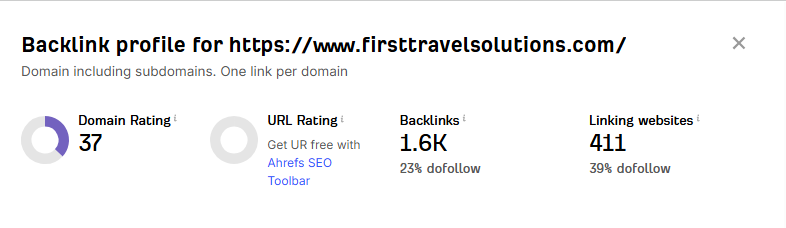
The link-building work focused on quality and relevance — earning authoritative, industry-relevant links that strengthen credibility for competitive B2B transport searches. The gains:
- Referring domains grew from 90 to 411, built on genuine transport, logistics, and business-sector sources.
- Total backlinks grew from 400 to 1,600, all contextual and niche-relevant.
- Domain Rating reached 37 — a strong authority score that signals real trust to search engines in a competitive commercial market.
- Link mix stayed natural and balanced, drawn from relevant industry and business sources rather than automated directories.
The result is a robust, credible backlink profile that search engines trust — the kind of authority that holds up in competitive B2B procurement searches rather than fading over time.
Challenges During Implementation
-
Algorithm shifts — Google updates shifted commercial rankings mid-campaign, especially across high-value UK transport procurement terms.
-
Crowded market — Established niche brokers and regional transport operators held top positions for high-intent B2B search terms.
-
Technical debt & thin copy — Core service pages lacked technical specifications, safety compliance details, and clear conversion funnels, requiring a complete structural overhaul.
-
Multi-sector complexity — Content had to maintain strict compliance and procurement alignment across distinctly different sectors (Rail Replacement, Corporate Shuttles, Airline Disruption, and Major Event Logistics).
What We Learned
-
Intent precision beats broad volume — B2B buyers search for risk-mitigated, compliance-backed transport solutions, not generic coach hire terms.
-
Sector-specific landing hubs drive conversions — Tailoring landing pages for corporate HR, rail operators, event teams, and school travel coordinators dramatically reduced bounce rates.
-
Conversion engineering unfreezes pipeline value — Prominent direct helpline links (0345 528 0270), sticky CTAs, and streamlined quote forms turned passive readers into active RFQ leads.
-
Topical authority builds long-term defense — Comprehensive coverage of fleet management, ESG scope 3 commuting policies, and safety standards established lasting search dominance.
The Takeaway
First Travel Solutions started as an industry leader with exceptional operational capabilities, yet its website functioned like a passive brochure that missed out on commercial search demand. It ends this 9-month campaign with something far more valuable: a high-performing digital lead generation engine it fully owns.
The company now ranks on Google’s first page for its core UK B2B transport queries—reaching corporate procurement directors, rail logistics managers, and event organizers alike. Behind that visibility sits real, durable performance: monthly organic traffic surged by +329%, top-5 commercial keywords grew from 6 to 64 terms, and verified commercial quote requests increased by +421%, transforming the website into a reliable driver of high-value transport contracts.